
Flea & Tick Control for South Florida Homes and Yards
Treatments that eliminate fleas indoors and reduce ticks outdoors, protecting your pets and family all year long. Backed by our 100% satisfaction guarantee.
Get My Free Inspection
Fill out the form below for an instant response.
Protect Your Home and Yard with Experienced Flea & Tick Control Across the Treasure Coast
Bugged Out Pest Control is your trusted partner for flea and tick control throughout the Treasure Coast, serving Martin, St. Lucie, Indian River, and Brevard counties for over 20 years.
Fleas and ticks are more than a nuisance. Fleas spread quickly through carpets, furniture, and pet bedding, causing itchy bites and passing tapeworms to pets. Ticks wait in tall grass and brush and can carry diseases like Rocky Mountain spotted fever and ehrlichiosis. Our warm, humid climate keeps both pests active nearly year-round, so a small problem can grow fast.
Because fleas and ticks often show up together, we treat them together: inside your home where fleas breed, and outside in the yard where both pests live and wait for a host. We also help you understand how these pests get in and where they hide, so you can take simple steps that lower the chance of them coming back.
Ready to Get Rid of Fleas and Ticks for Good?
Signs of Fleas and Ticks Around Your Home

Excessive Scratching
Pets that scratch, lick, or bite at their skin more than usual are often the first sign of fleas. Watch for hair loss, scabs, or red irritated skin, especially around the neck, belly, and base of the tail, where fleas like to gather.
Flea Dirt
Small black specks on pets, pet beds, or furniture are usually flea dirt, which is flea droppings made of digested blood. Place a few specks on a damp paper towel. If they turn reddish-brown, fleas are feeding in your home.
Visible Fleas
Adult fleas are tiny, reddish-brown, and jump quickly when disturbed. Check your pet’s belly and the base of the tail with a flea comb, or look on carpets and bedding. If you can see adult fleas, there are likely many more eggs and larvae you can’t see.
Bites on people
Small, red, itchy bumps that show up in clusters or lines, often around the ankles and lower legs, are a common sign of flea bites. Fleas will bite people when pets aren’t available, so bites can show up even in homes without pets.
Flea eggs
Flea eggs are tiny white specks that fall off pets and collect in carpets, rugs, pet bedding, and upholstered furniture. A single female can lay dozens of eggs a day, which is why treating your pet alone rarely ends an infestation.
High-risk yard conditions
Tall grass, leaf litter, dense brush, and shady, damp areas give fleas and ticks the perfect place to hide. Yards that border woods or preserves, or that get visits from raccoons, opossums, or stray cats, face a much higher risk of activity.
Inspection and Evaluation
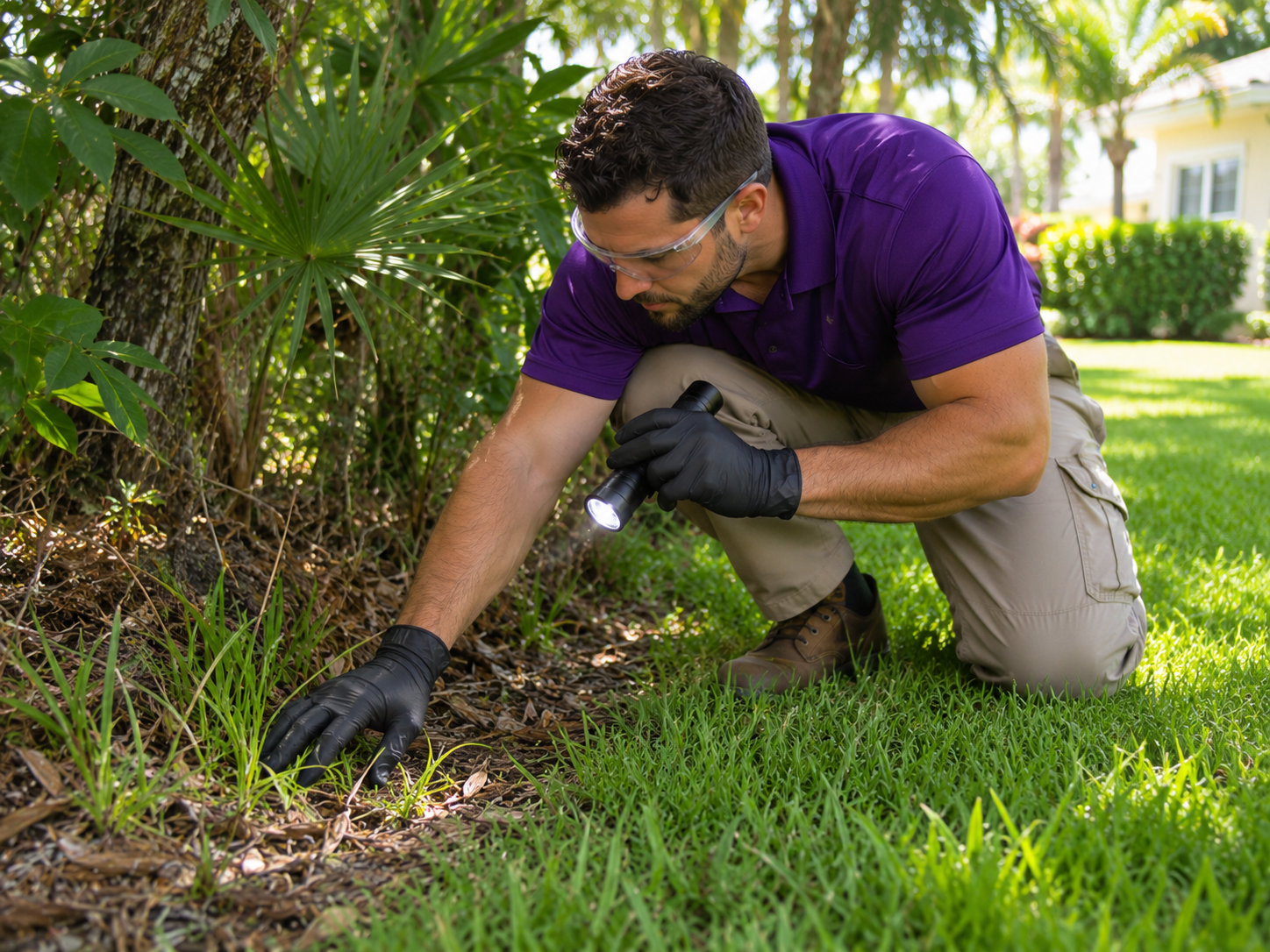
Every flea and tick service starts with a thorough inspection of your home and yard. Inside, we check the areas where fleas breed and hide, such as carpets, rugs, pet beds, and upholstered furniture. Outside, we look for shady, humid spots where fleas and ticks gather, including tall grass, leaf litter, brush, and the edges of wooded areas. We also note conditions that may be inviting these pests, such as wildlife activity and overgrown vegetation. From there, we build a treatment plan around your property, your pets, and your level of activity.
Treatment and Prevention Strategies
Our flea and tick treatments target these pests where they live, inside and out. Indoors, we treat carpets, furniture, and pet areas to stop fleas at every life stage and break the breeding cycle. Outdoors, we treat shady areas, landscape edges, and other high-risk zones to reduce both flea and tick populations in your yard. Products are applied with care around your family and pets. We also give you practical prevention tips and recommend seasonal follow-up treatments to keep your home and yard protected year-round.

Flea & Tick Control Frequently Asked Questions
Why do I have fleas but no pets?
Fleas don't need pets to get inside. Wildlife like rodents, raccoons, opossums or even other dogs and cats can carry fleas into your yard, and those fleas can migrate indoors on their own or hitch a ride on clothing and shoes. Previous residents' pets can also leave behind flea eggs in carpets that hatch later, so a pet-free home isn't automatically flea-free.
Why does my dog have fleas even though I use flea prevention?
Flea prevention reduces risk but isn't foolproof. Products can wear off between doses, miss a spot during application, or simply not keep pace with heavy outdoor exposure. Fleas can also already be present in your yard or home environment, reinfesting your pet shortly after treatment. Combining prevention with environmental treatment usually gives more reliable, lasting results.
What do flea bites look like on humans?
Flea bites on humans typically appear as small, red, itchy bumps, often clustered in groups of three or four, commonly around the ankles, lower legs, and feet. They can cause noticeable swelling and intense itching, sometimes developing a small red halo around the bite. Scratching can increase the risk of skin irritation or secondary infection.
What are the signs of a flea infestation in my house?
Common signs of a flea infestation include pets scratching more than usual, small black specks (flea dirt) on bedding or furniture, visible fleas jumping on carpets or upholstery, and red, itchy bites on your ankles or legs. You might also notice tiny white eggs in carpet fibers or pet bedding as the population grows.
Why does my dog keep scratching even after a bath?
A bath removes fleas present at that moment, but it doesn't treat fleas hiding in carpets, bedding, or the yard, which can quickly reinfest your pet. Flea eggs and larvae can also survive in the environment for weeks, hatching later and restarting the cycle. Persistent scratching after bathing usually points to an environmental infestation, not just fleas on your pet.
Are fleas dangerous for cats?
Yes, fleas can pose real risks to cats, causing intense itching, skin irritation, and in some cases flea allergy dermatitis. Heavy infestations can lead to anemia, especially in kittens, and fleas can transmit tapeworms if ingested during grooming. Left untreated, flea problems tend to worsen quickly given how fast fleas reproduce.
How long does it take to get rid of fleas in a house?
Most homeowners see a significant reduction in flea activity within one to two weeks of treatment, though full elimination can often more than 1 treatment depending on the level of infestation due to the flea life cycle. Eggs and pupae can survive treatment initially and hatch later, which is why follow-up treatments are typically recommended for complete, lasting control.
What should I know about flea treatment if I have kids or pets?
When applied correctly by trained professionals, flea treatments are designed to be family- and pet-friendly. Products are applied according to label guidelines, targeting carpets, upholstery, and other flea hot spots. We'll also let you know about any recommended wait time before pets or family members should return to treated areas.
How much does professional flea control cost?
Our one-time flea treatment starts at $250 and covers both the inside of your home and your yard, where fleas breed and hide. We guarantee no fleas and treat until the issue is resolved. Pricing depends on the size of your lot. For ongoing protection, our Pest Lawn program starts at $49/month and includes six yard treatments a year for fleas, ticks, and fire ants. It’s especially popular with dog owners. If you sign up for Pest Lawn Control service with a 12 month commitment when you book your flea treatment, we’ll waive the one-time flea treatment fee so you only pay the Pest Lawn Control initial service.
Do I need to treat my yard and house both for fleas?
Yes, treating both is usually necessary for lasting results. Fleas often live and breed in shaded, humid areas of your yard before making their way indoors on pets or through open doors. Treating only the house without addressing the yard often leads to reinfestation, since the outdoor population continues supplying new fleas.
How do I keep fleas from coming back?
Consistent pet flea prevention, regular vacuuming, and washing pet bedding frequently all help reduce the risk of fleas returning. Treating your yard, especially shaded and humid areas, further limits outdoor flea populations from making their way back inside. Scheduling recurring professional treatments offers the most reliable, long-term protection against reinfestation.
Do fleas go away in the winter in Florida?
Not typically. Florida's mild winters rarely get cold enough to eliminate flea populations the way harsher climates do further north. Fleas can remain active nearly year-round across the Treasure Coast, which means ongoing prevention matters even during cooler months, not just during the warmer, more humid parts of the year.
What Our Customers Say
We take pride in every home we protect. Here's what your neighbors are saying.
50% Off Your First Quarterly Treatment
Take the first step toward a pest-free home. Sign up for our annual protection plan today and save half on your initial service.
- New customers only
- Comprehensive full-home barrier
- Limited time special offer - claim your offer before it expires
Fill out the form below for an instant response.
Service Areas
Providing exceptional local service across the South Florida's Treasure Coast and Space Coast.

St. Lucie County
Indian River County
Martin County
Brevard County
Don't see your city listed? We're constantly expanding our reach.